Like Coming Home
Interview with Roland Hänggi on work, attitude, and retirement
from Dr. Elena D’Cruz
01. July 2026
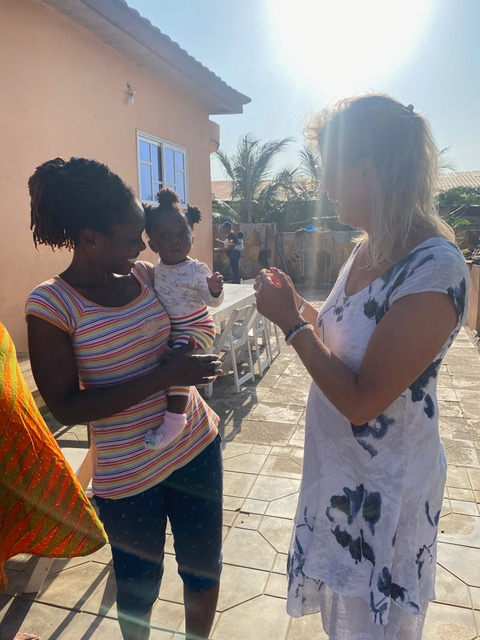
It is just after six o'clock in the morning in Tema, Ghana. Roland gets up, gets ready for the day, and has breakfast. Today, it is an omelet with fresh bell peppers and chili, and some coffee. Sometimes he prepares the muesli he brought from Switzerland with water and a little canned milk.
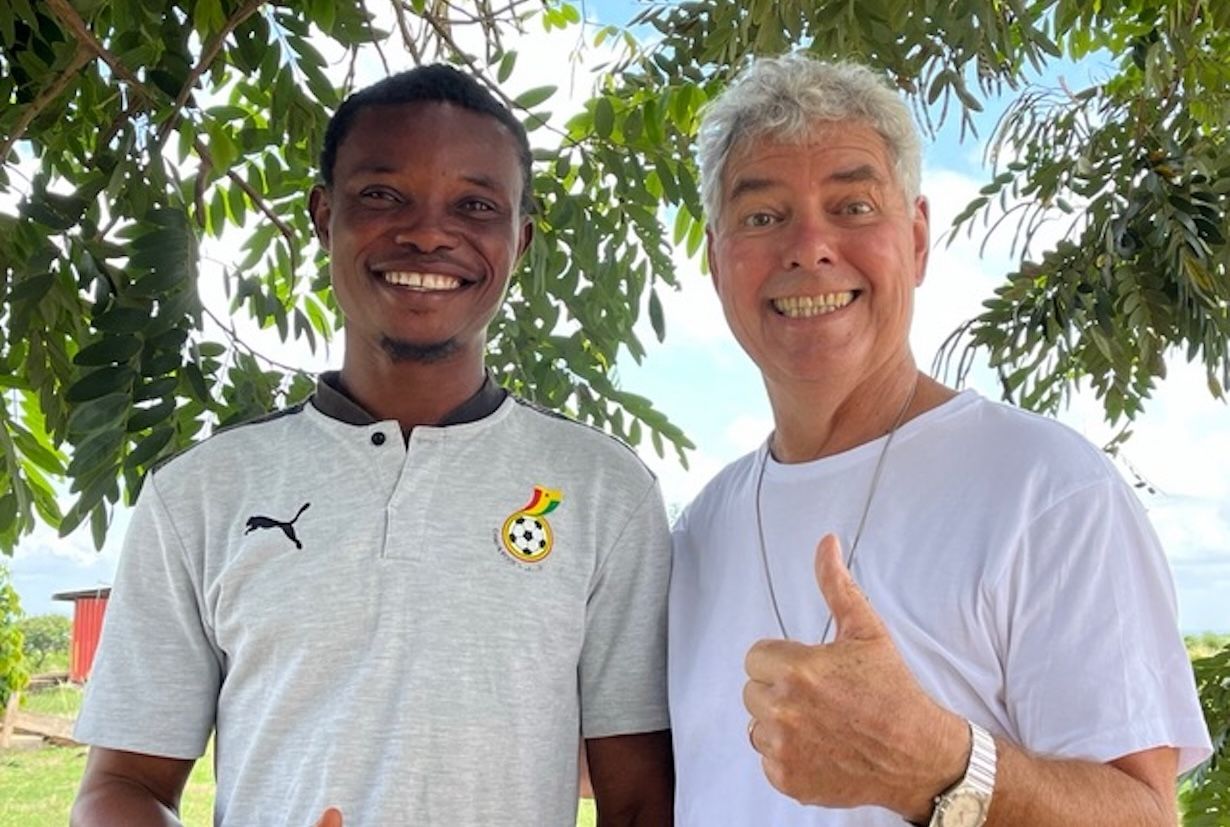
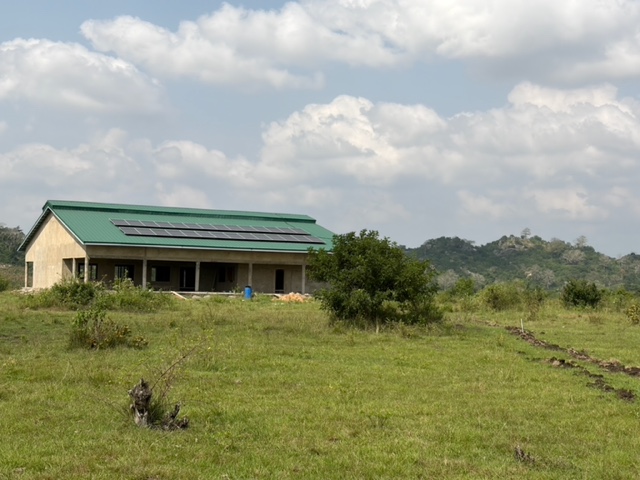
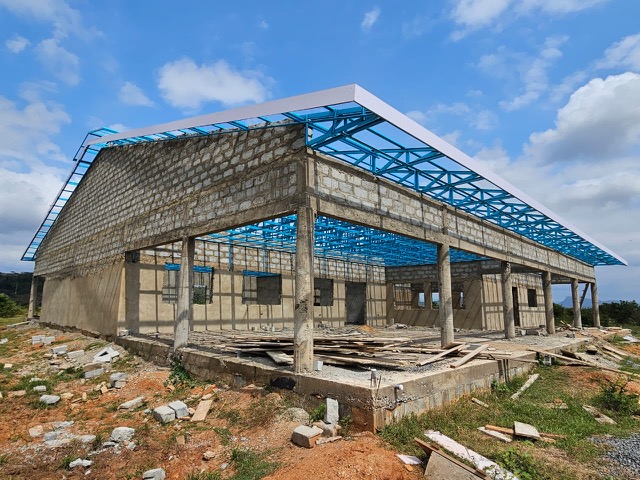
By nine o'clock, he is at the construction site. Roland supports the nonprofit organization FAFA in building a home for children in Ghana, where they receive education, accommodation, and sports development opportunities. He stays until late afternoon so that he can return to his accommodation before dark. For dinner, he often buys fried rice with freshly caught fish and vegetables from roadside vendors. Back at home, he sits down once again, draws plans, revises electrical schematics, and thinks through the next steps.
It is a daily routine that has little in common with traditional project meetings, KPIs, and deadlines. Yet it brings together everything that has shaped Roland over the decades. We spoke with Roland on the phone during his stay in Ghana about this and other topics.
Coopers: Roland, how does this moment feel after so many years in project work, now that you are retired?
Roland Hänggi (RH): "Honestly, the first few weeks were still filled with mental noise. After 43 years and one month in IT, work does not simply disappear from your system. Especially not after more than twenty years in a high-performance culture where 100 percent was considered the minimum and 120 percent was the expectation. The Christmas season helped me slow down. Then came January 4, 2026. The trip to Ghana. It was like a clean break. A different focus. Since then, work has been mentally and emotionally completed. The chapter is closed.
I must admit, though, that the perfectionism remains and sometimes clashes with the relaxed pace of life in Africa. Time works differently here. When someone says, 'I am almost there,' that can mean many things. Half an hour, half a day, or even an entire day. I used to live by the clock. In Ghana, I am learning to let it go."
Retirement in good company
Two things were clear to him: he wanted to work as a freelancer one more time before ending his career. And ideally, he wanted to do it with Coopers.
Coopers: Why Coopers?
RH: "Throughout my career, I worked with many recruiting agencies, including Coopers. I already knew Linda and had built a trusting relationship with her. That trust was strengthened even further through my positive interactions with other people at Coopers. When a suitable position at Coopers opened up at exactly that moment, it felt like destiny rather than coincidence. After one interview with the client company, everything was finalized within two weeks."
What made the difference for him was not only the professional fit. It was the feeling of being seen as a person. As Roland. Not as a resource. The family-like atmosphere, the closeness, the respectful interactions. He always felt those things at Coopers.
Coopers: Would you recommend Coopers?
RH: "Anytime."
Breaking down complexity like LEGO bricks
Roland's way of working is not based on a methodology but on a mindset. Three strengths have shaped the way he thinks and acts, and they continue to do so today.
Coopers: What motivates you in your work?
RH: "I was always fortunate to work in positions where I could use my strengths. First, there is my playful approach to challenges. Problems are not obstacles to me. They are invitations to solve a puzzle. Where others see complexity, I see the beginning of a game.
Second, there is my ability to break down complexity, just like LEGO bricks. It is simply how I am wired. I think in building blocks, simplify, reorganize, and only then put everything back together. A mentor once told me, 'You are thinking far too complicated, Roland.' That stayed with me. Ever since, I have learned to take things apart before putting them back together. The real art lies in being able to think multidimensionally before bringing the individual pieces together into a coherent whole."
And third: Roland thinks in pictures. He always starts with the ideal end result. Only afterward do details, priorities, and decisions follow. As he puts it: "External factors such as budgets create the framework within which I apply the min-max principle: What is essential, what is possible, and what can wait."
This way of thinking has long become part of his philosophy of life. Even in Ghana, these strengths and this positive mindset continue to serve him well.
Ghana – Roland's home of the heart
Coopers: What do you see when you sit on the property?
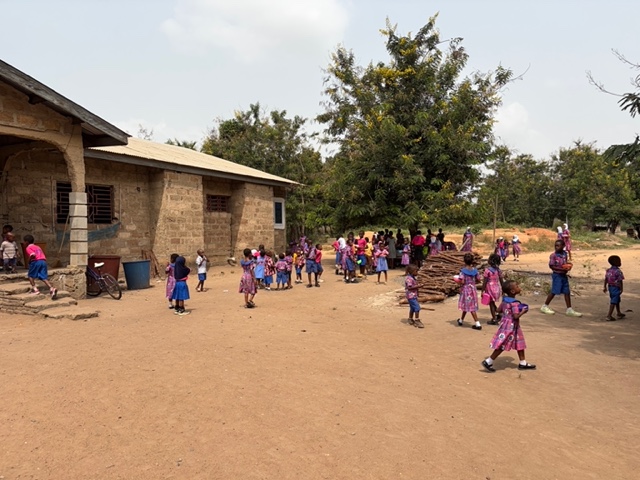
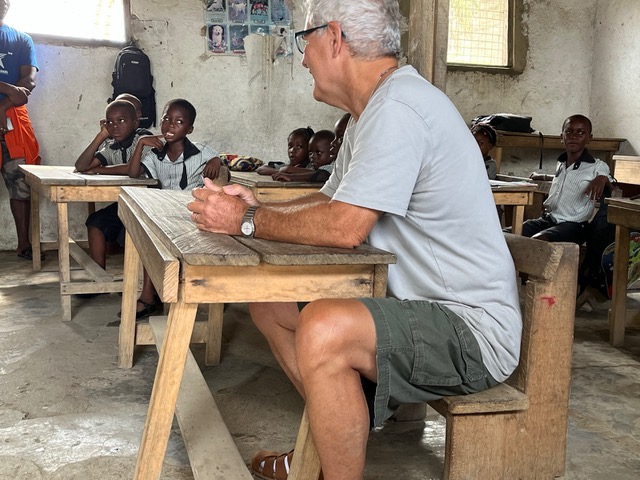
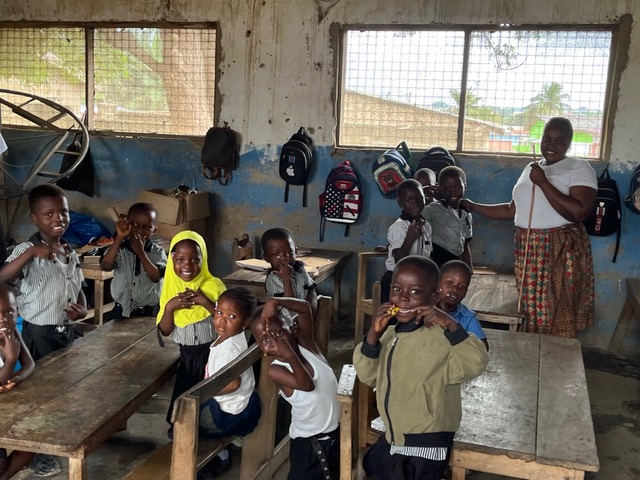
RH: "I do not just see the open space and the buildings. I see children playing soccer. Children carrying schoolbooks under their arms. Children learning, laughing, and finding a place where they can stay. Many of them are very poor, often half-orphans or orphans. The FAFA project is designed for the long term. The children can stay here for years, from elementary school all the way through university. It is becoming a place where education, daily life, and community grow together."
Coopers: When did you realize that this was more than just a project?
RH: "Right from my first visit. The moment I stepped out of the car onto that vast piece of land. It was love at first sight. Or, as I describe it: it felt like coming home."
What also moves Roland about this place is its unique geographical location. Nearby, the Equator and the Prime Meridian intersect. Two of the Earth's principal axes. For him, it is a powerful symbol that helps keep him grounded.
Ghana has become a home of the heart for Roland. His wife feels the same way and supports his commitment from Switzerland. She gives him the freedom to follow this path.
Coopers: What does everyday life look like outside of the construction site?
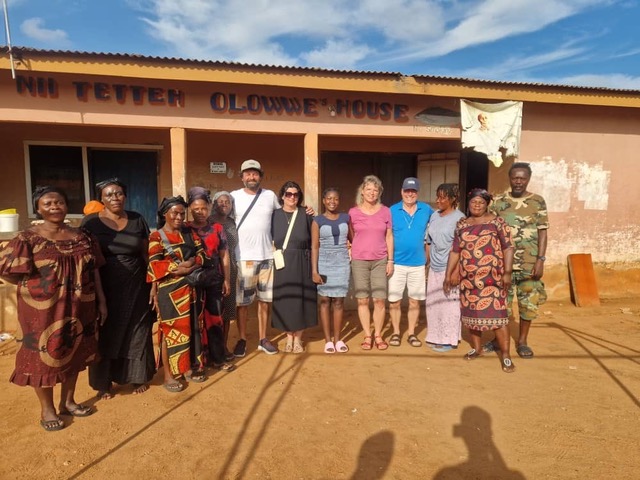
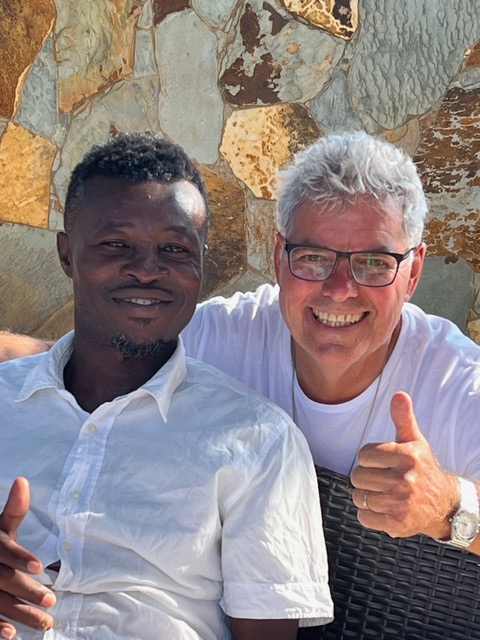
RH: "On weekends, I consciously slow down. Sometimes I drive to the coast, stay in a small hotel, and enjoy the ocean and the pool. Swimming in the ocean is actually too dangerous because of the strong currents. Ghana remains largely untouched by tourism. I am grateful for that. As the 'white man,' people in the village know me by now. The traditional handshake with the finger snap, a few words in Twi, my name, and the ice is broken. Sometimes I invite my team out for a meal, or I cook for them. We sit together, eat, laugh, and share everyday life."
Meaningful work
In Ghana, Roland is responsible for all construction-related activities. Planning, quotations, discussions with site managers, coordination, and next steps. School buildings are marked out, progress is documented, and supporters are kept informed.
Coopers: What do you tell the construction workers when things become difficult?
RH: "I always tell them: I am not doing this for myself. I am doing it for you. For the children. Because they are the future. Whenever I say that, I think of a line from a Michael Jackson song: Heal the world, make it a better place, for you and for me and the entire human race. For me, that captures exactly what this is all about."
In a way, we can relate to that. At Coopers, we accompany people on their professional journeys. We open doors and build bridges. Roland goes one step further. He creates places where professional journeys, doors, and bridges can become possible in the first place.
Coopers: Roland, our conversation is coming to an end. What is still on your agenda today?
RH: "The contractors are currently on site. We are discussing the next tasks, reviewing quotations, and approving upcoming work. I am speaking with the site manager about pricing. We prefer daily rates over fixed-price agreements. That way, I can instruct the team on what to watch for, even when I am back in Switzerland. On Monday, we will stake out the school buildings. I will take photos. Some supporters focus specifically on educational projects. We send them the pictures and show them what FAFA stands for. What it looks like. What is taking shape."
Roland smiles into the camera. We say our goodbyes and end the call. Time to get back to the construction site.
The qualities that defined Roland throughout his career – reliability, clarity, and humanity – continue to live on today in a different context. Perhaps that is the most beautiful form of continuity.
We are grateful that we were able to accompany Roland on part of his career journey and share the story of his inspiring commitment. We wish him all the very best for the future.
#ingoodcompany
More from Coopers on LinkedIn
Coopers World
Coopers Summer Apéro Zurich 2026
The Coopers Summer Apéro Zurich 2026 at the beautiful Lake Zurich was once again an unforgettable evening, especially because of our wonderful guests. Click here for the photo gallery.
"Strategy is about execution"
New board member Michael Wiendl shares how he came to join Coopers, his strategic insights, and his perspective on humanity. Read the full interview here.
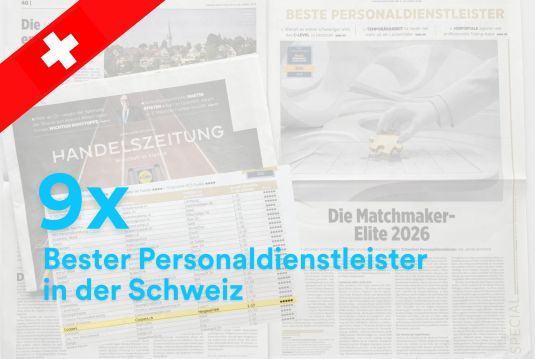
9 Years in a Row Among the Best Recruiters in Switzerland
For the 9th year running, Coopers ranks among Switzerland's best recruitment agencies – with full marks in all three categories. Read more.
"There is nothing else like it in Switzerland"
In this interview, our new board member talks about values, corporate culture, and his belief that, in the end, it always comes down to how people treat one another.